
words by Cheryl S. Ezekiel
A towering figure in Brazilian literature and an essential voice in rethinking the global literary canon, Machado de Assis stands by his imperative contribution to Brazilian literature. He has written some of Brazil's greatest works of literature — Dom Casmurro and The Posthumous Memoirs of Bras Cubas — establishing him, quite understandably, as the father of Brazilian literature.
Born in 1839 in Rio de Janeiro to a poor, mixed-race family, Machado’s ascent to being a literary pioneer was nothing short of extraordinary. He defied the racial and social hierarchies of a deeply stratified, colonial Brazil, crafting works that remain both universal and uniquely reflective of his context. Despite his immense contributions, his legacy is often framed within narrow, nationalistic terms, overlooking his relevance to broader decolonial narratives.
During Machado de Assis' upbringing in Brazil, slavery was still prevalent — abolished only in 1888 — bearing the scars of its colonial past. His mixed-race heritage and humble beginnings placed him at the margins of a society that privileged whiteness and wealth. Machado’s intellect and talent found a path forward despite these barriers. Primarily self taught, he mastered multiple languages, including French and English, and immersed himself in European literature, which would later influence his writing.
Yet Machado’s position as a man of mixed heritage in a colonially structured society was complex. While he achieved prominence, his work was often read by elite Brazilian literary circles, sometimes obscuring the subtle ways he critiqued the very structures that enabled his rise.
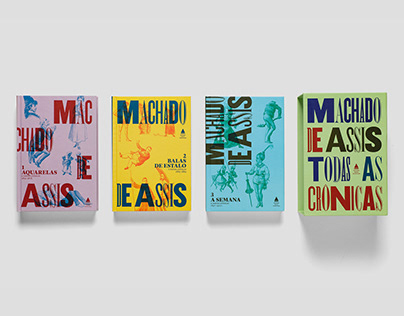
Machado’s work spans multiple genres, including poetry, plays and novels, but he is best known for his prose, particularly the novels of his later years. His most celebrated works, Memórias Póstumas de Brás Cubas (The Posthumous Memoirs of Brás Cubas, 1881) and Dom Casmurro (1899) are interestingly modern in their narrative techniques and thematic depth.
The Posthumous Memoirs of Brás Cubas is a satirical masterpiece, narrated by a dead man who recounts his life with striking wit and irony. This novel derails from traditional storytelling by relaying the story through an unreliable and “dead” narrator whose reflections expose the hypocrisies and moral decay of Brazil’s elite. This prose finds humour in the darkness, conveying a powerful message of regarding colonialism. Through Brás Cubas, Machado critiques the imperialist and hierarchical strata of his society, showcasing a fierce commentary on colonial legacies.
Similarly, Dom Casmurro explores themes of jealousy, power and betrayal while subtly questioning the dynamics of race, gender and class. The ambiguity surrounding Capitu, one of the novel’s main characters, invites a deeper exploration of how societal prejudices shape perceptions of women, particularly those of mixed heritage.
To place Machado de Assis in a decolonial framework is to uncover the ways his work challenges the cultural dominance of Europe while simultaneously engaging with it and invariably imbibing it. Although his work was influenced by or mirrored European literary traditions, his writing reflects a unique Brazilian sensibility, shaped by the country’s racial and social complexities - revealing colonialism through his eyes and experience.
Machado’s use of irony and ambiguity can be seen as a form of resistance against colonial narratives that sought to impose singular truths. By refusing to offer clear moral resolutions or definitive character judgments and delving into the grey area, he undermines the authority of dominant forums and invites readers to question inherited hierarchies. His works also showcases the inner lives of characters who exist on the margins, subtly critiquing the societal structures that condone inequality.
Additionally, Machado’s position as a mixed-race writer navigating predominantly white literary circles mirrors the broader struggles of cultural decolonisation. His success in gaining recognition in these forums, while simultaneously critiquing their foundations, highlights the duality of resistance and adaptation often required of colonised communities.
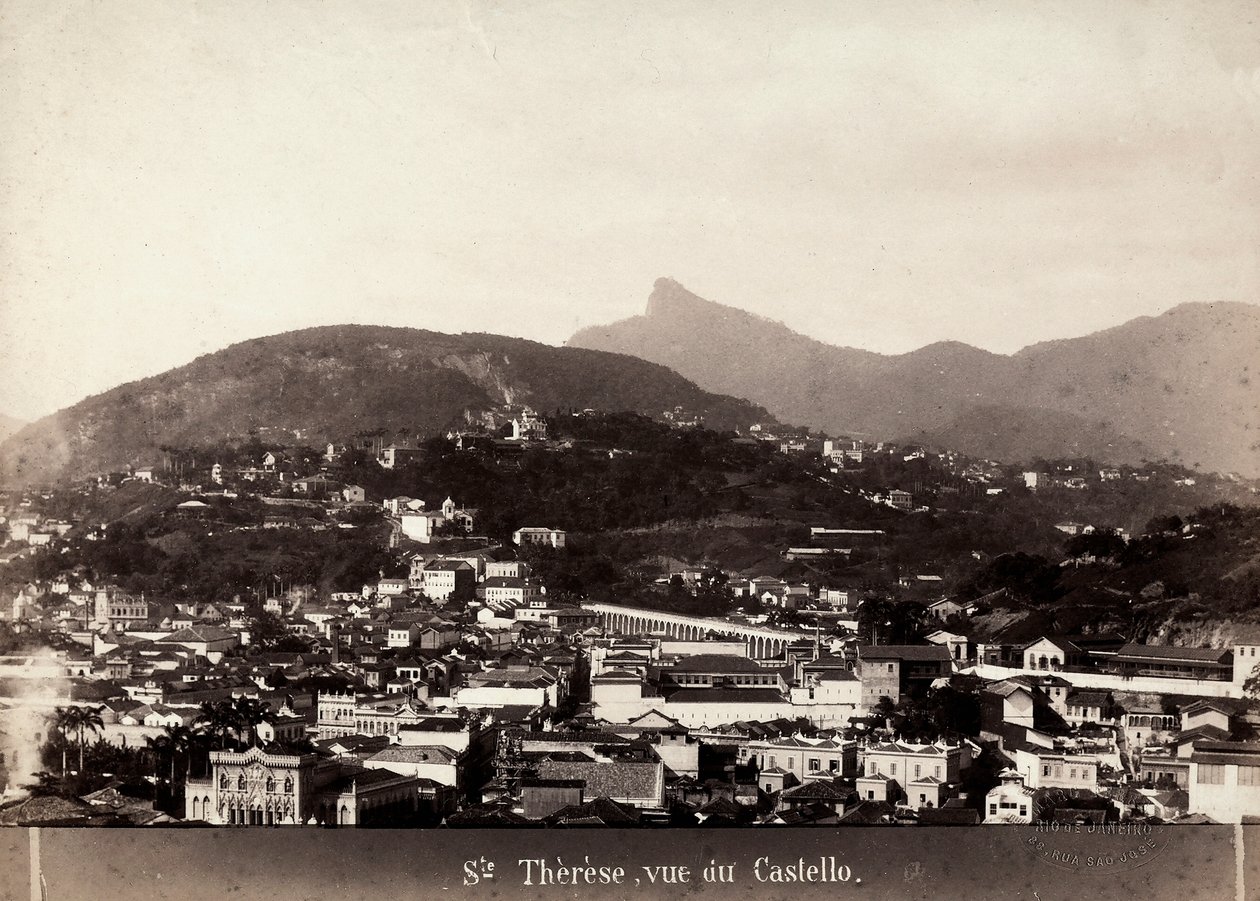
Santa Teresa, Brazil. c. 1880 by Marc Ferrez
Machado’s relative obscurity outside of Brazil is a thought-provoking reminder of how colonial legacies continue to shape global literary canons. Despite his undeniable genius, his works are rarely included in discussions of world literature, with many people having never heard of him. This marginalisation not only diminishes his contributions but also reinforces the minimal global acknowledgement of Latin American and Afro-descendant writers in global cultural conversations. Decolonising our bookshelves does not mean revamping all European books and replacing them with books written by authors from different parts of the world. It simply means that as readers and people seeking peace, we recognise that literary excellence is not confined to the West. It implores reading Machado de Assis not merely as a Brazilian writer but as a global figure whose insights into power, identity and human frailty resonate far beyond his time and place. This concept applies to all predominant and enriching literary works of different languages and cultures.
To read authors like Machado is to engage in an act of intellectual decolonisation. It is to challenge the dominance of Eurocentric narratives and to embrace the variety of voices that define our shared human race, in essence our humanity. By acknowledging and appreciating figures like Machado de Assis, we not only enrich our understanding of literature but also take a step toward dismantling the colonial frameworks that continue to shape our world.
Therefore, dear reader, consider the next addition to your bookshelf, let Machado de Assis be an important addition to your intellect; not just to the complexities of 19th-century Brazil, but to the enduring truths of human nature and the ongoing struggle for justice and equality.
With knowledge and information comes power, power to pave the way to a more harmonious world.